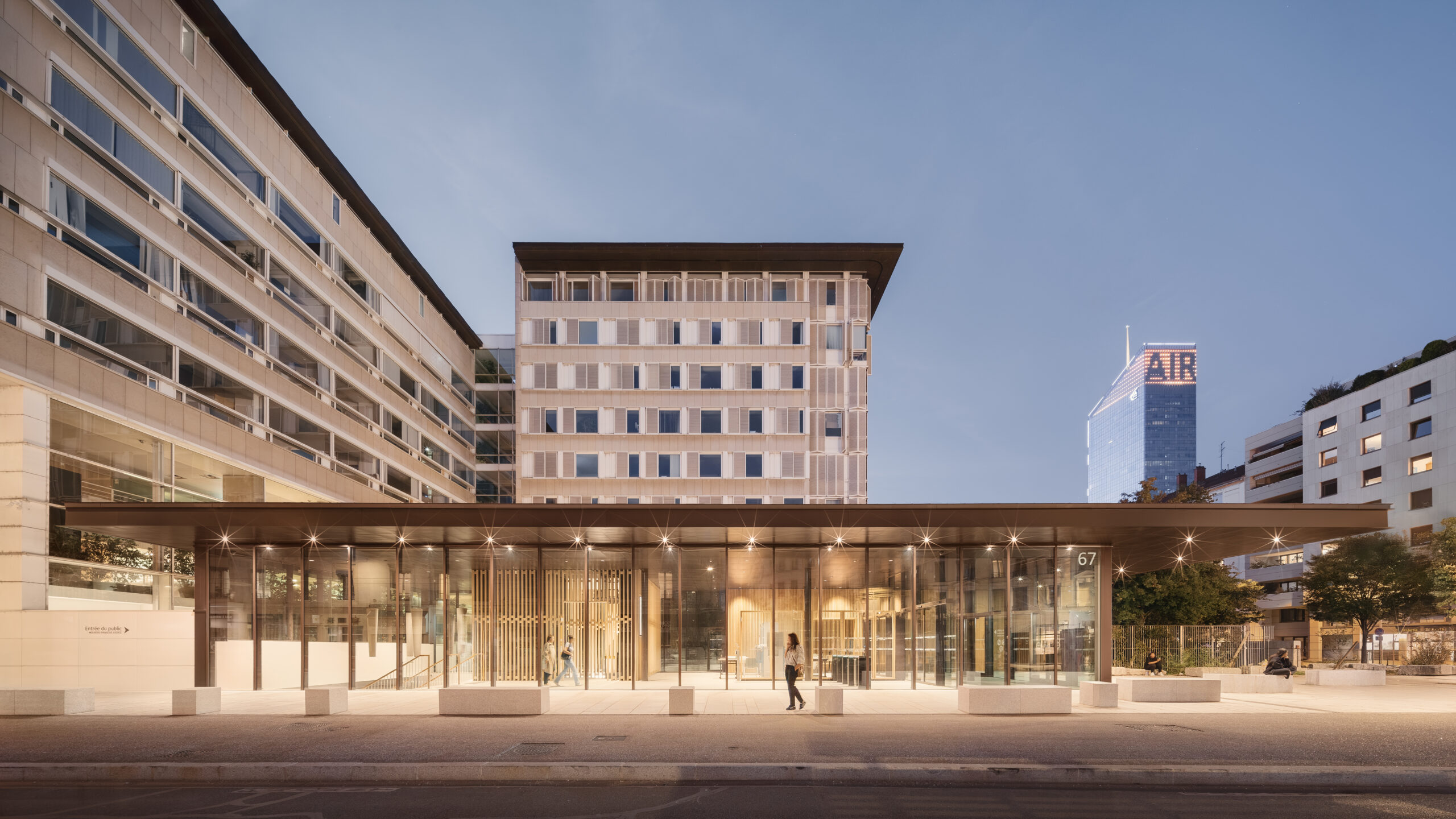
SERVICE D’ACCUEIL UNIQUE DU JUSTICIABLE – NOUVEAU PALAIS DE JUSTICE | LYON (69)
Courthouse
CLIENT : Ministère de la Justice | Ministry of Justice
CONSULTANTS : AIA Ingénierie (BET Structure, Fluides, Économie, CSSI, VRD, Sûreté, BIM Manager); AIA Studio Environnement (BET HQE); Europe Acoustique Ingénierie (Architecte paysagiste)
SURFACE : 1 350 m²
PHASE : Competition 2020 – Completion 2025
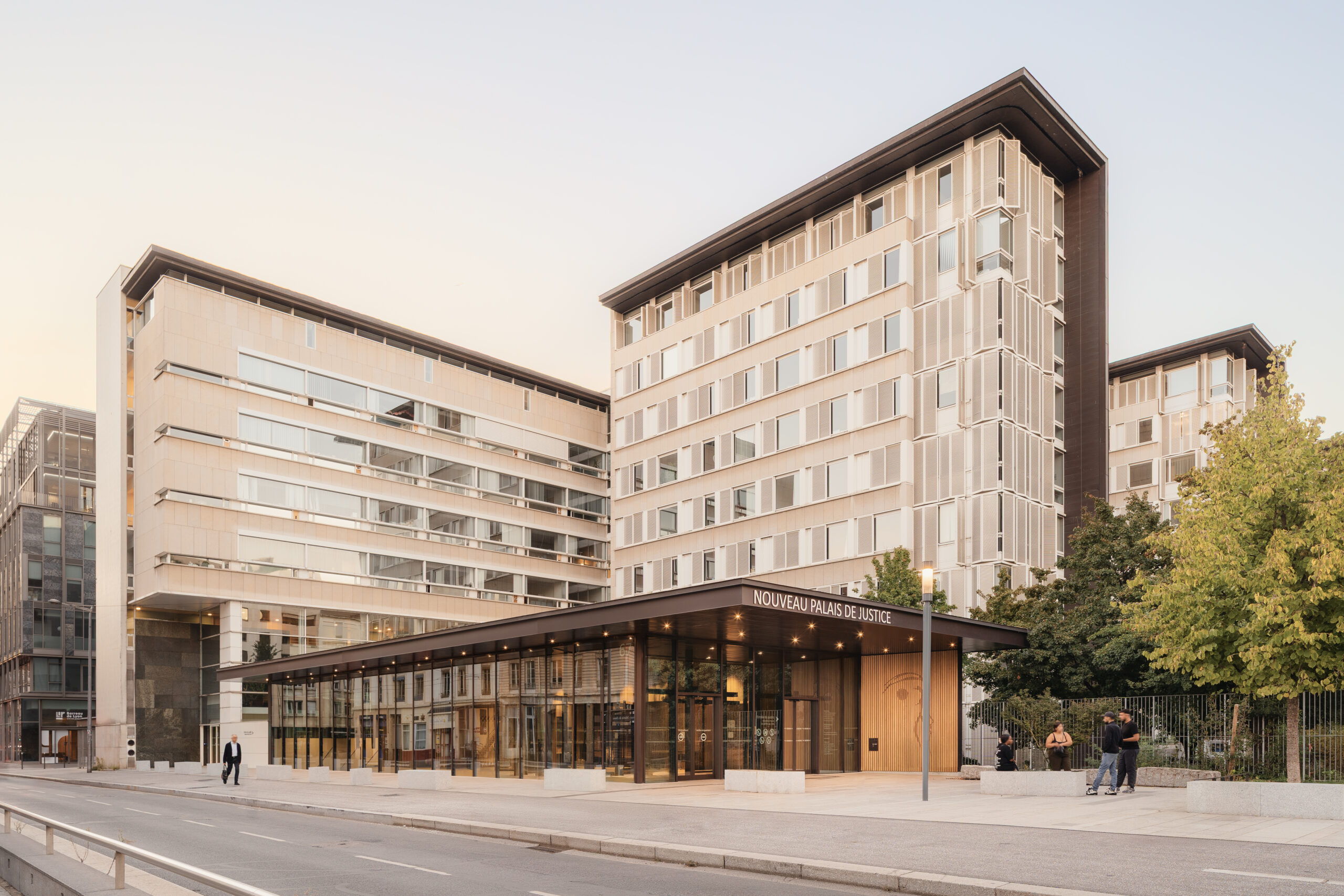
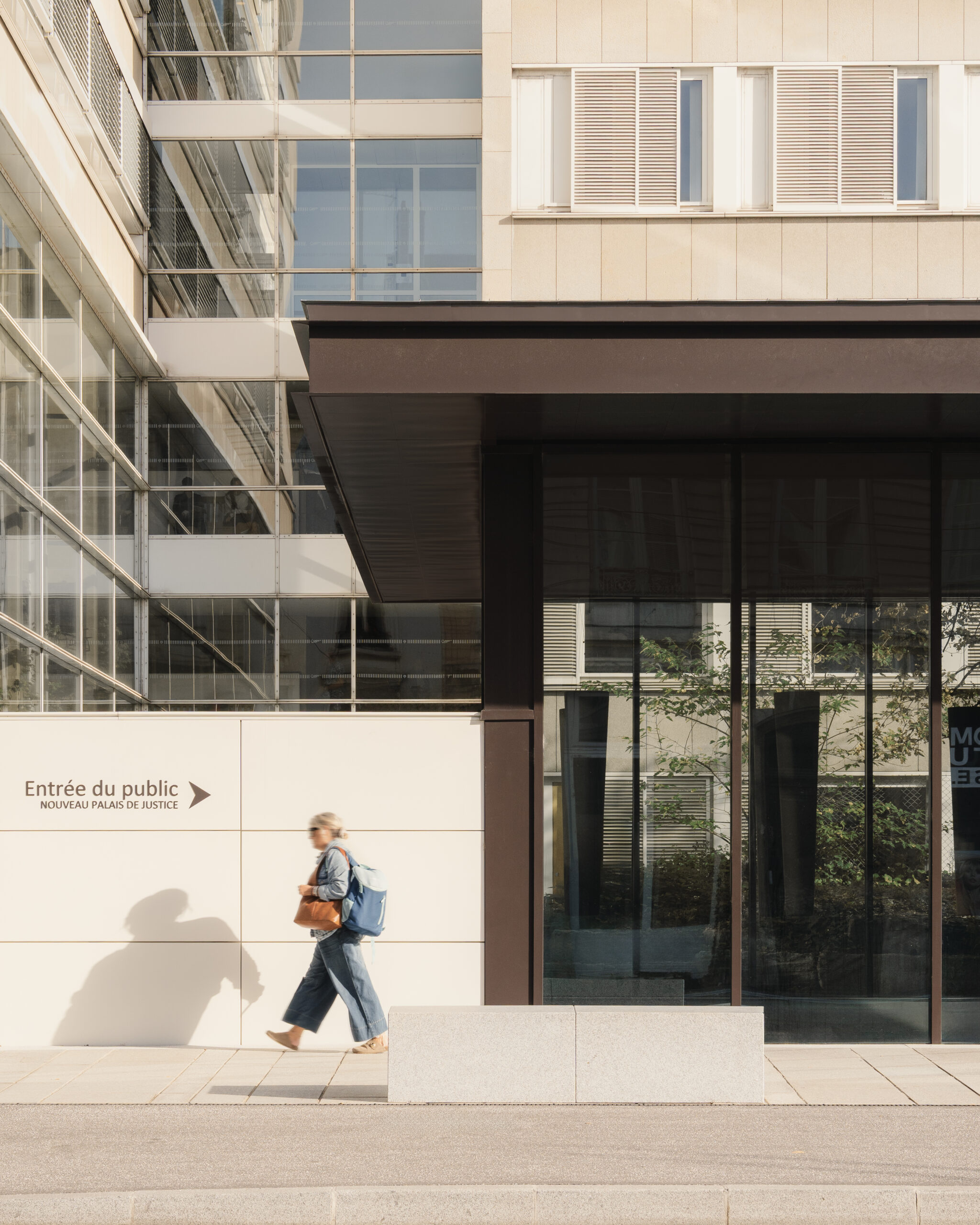
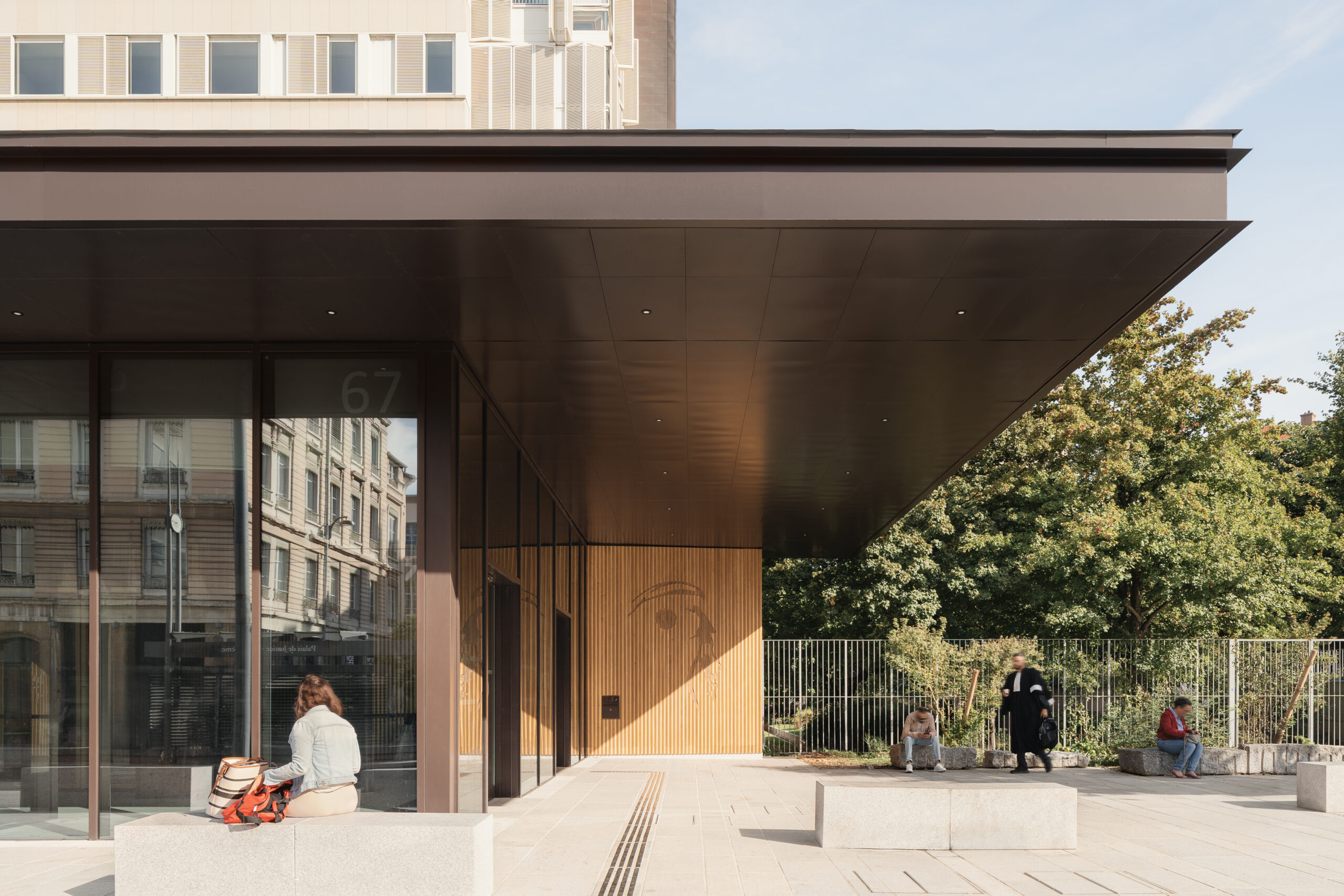
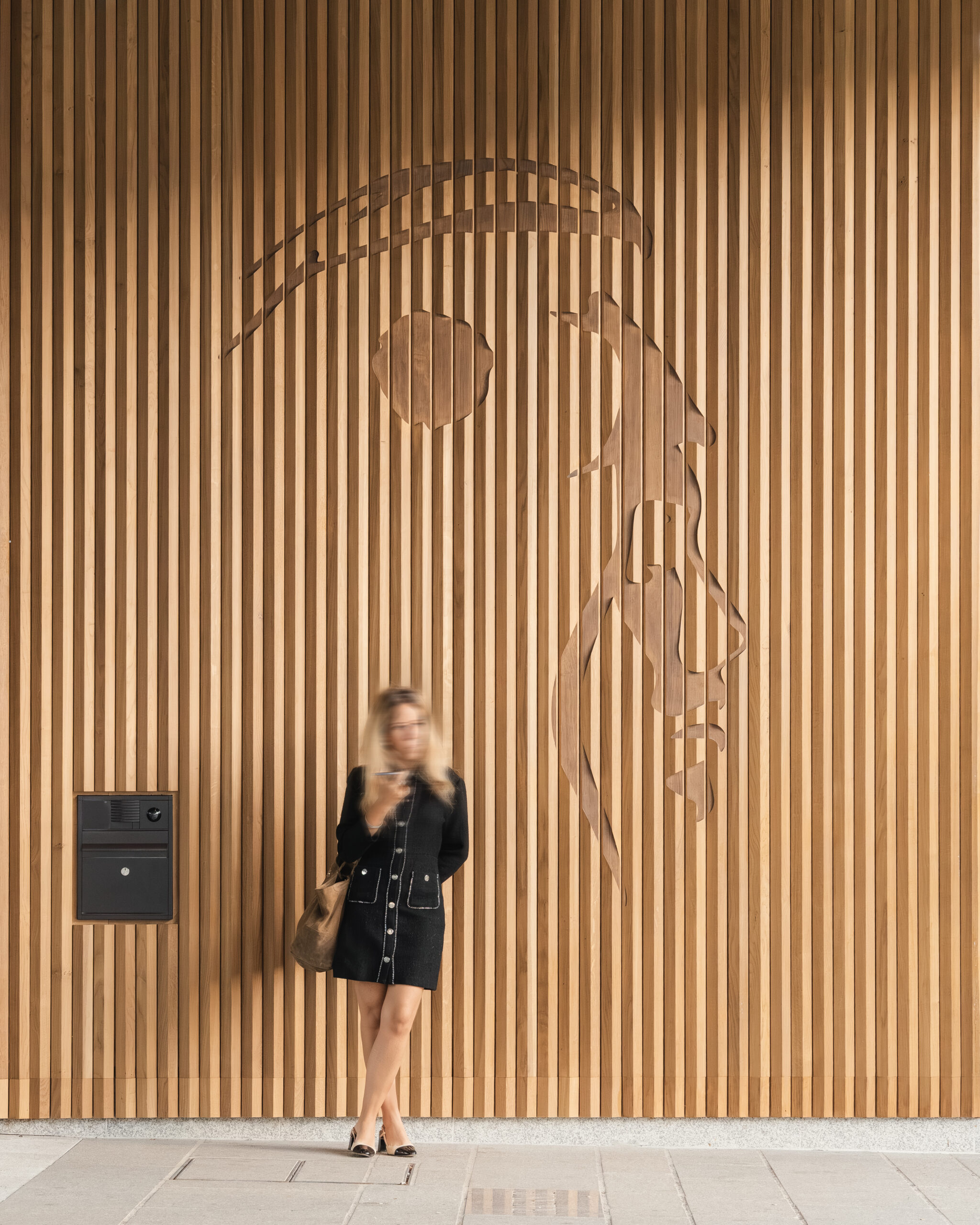
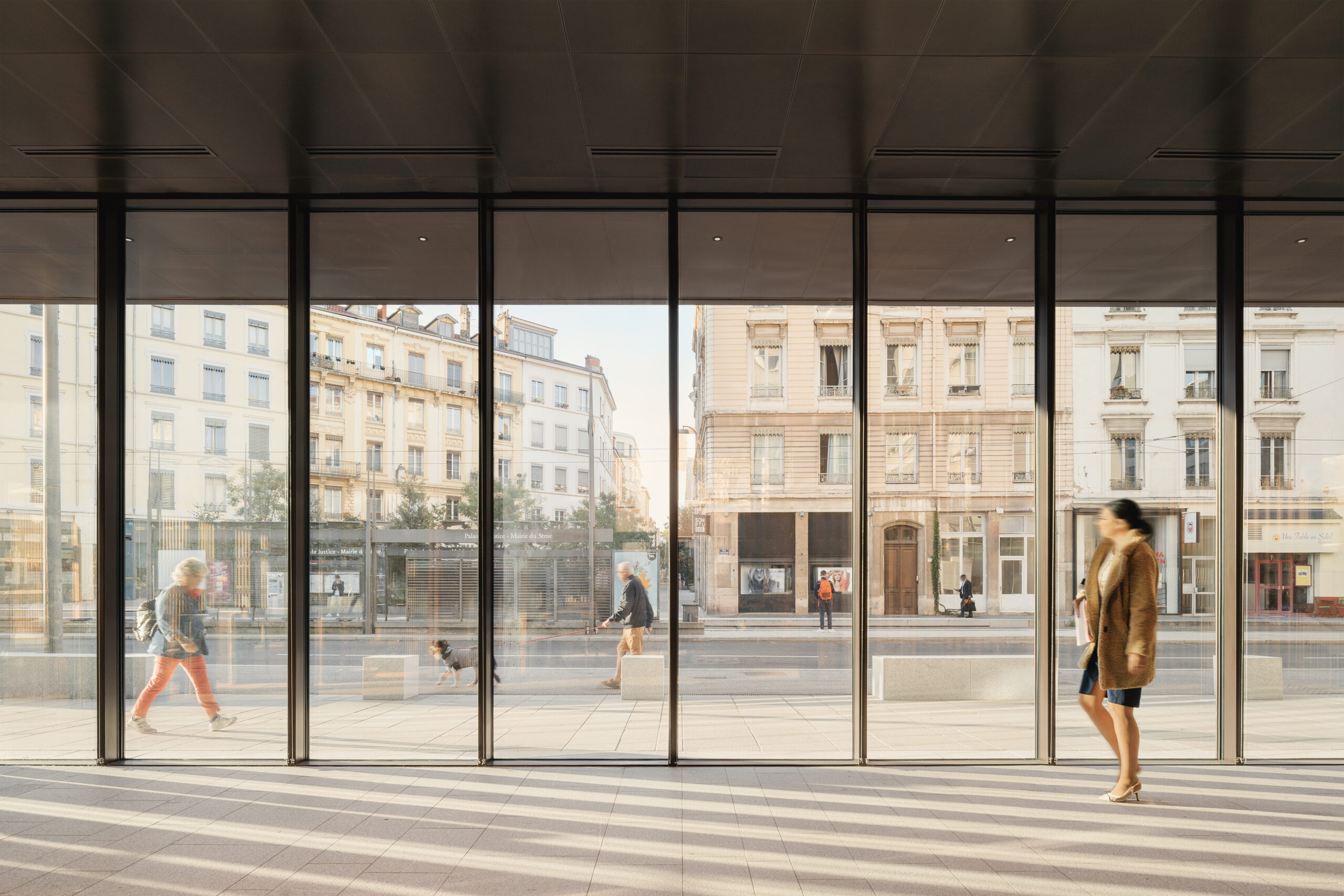
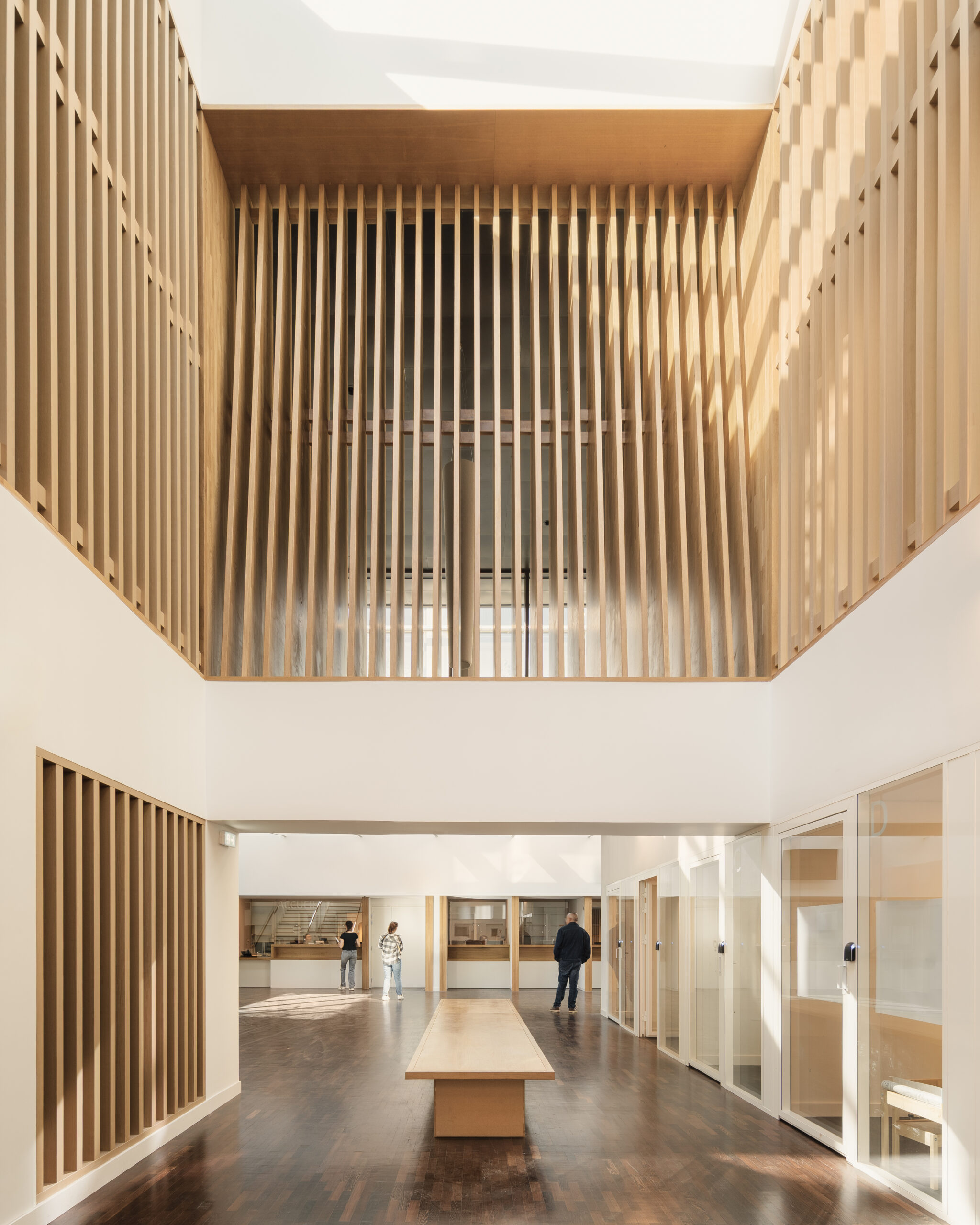
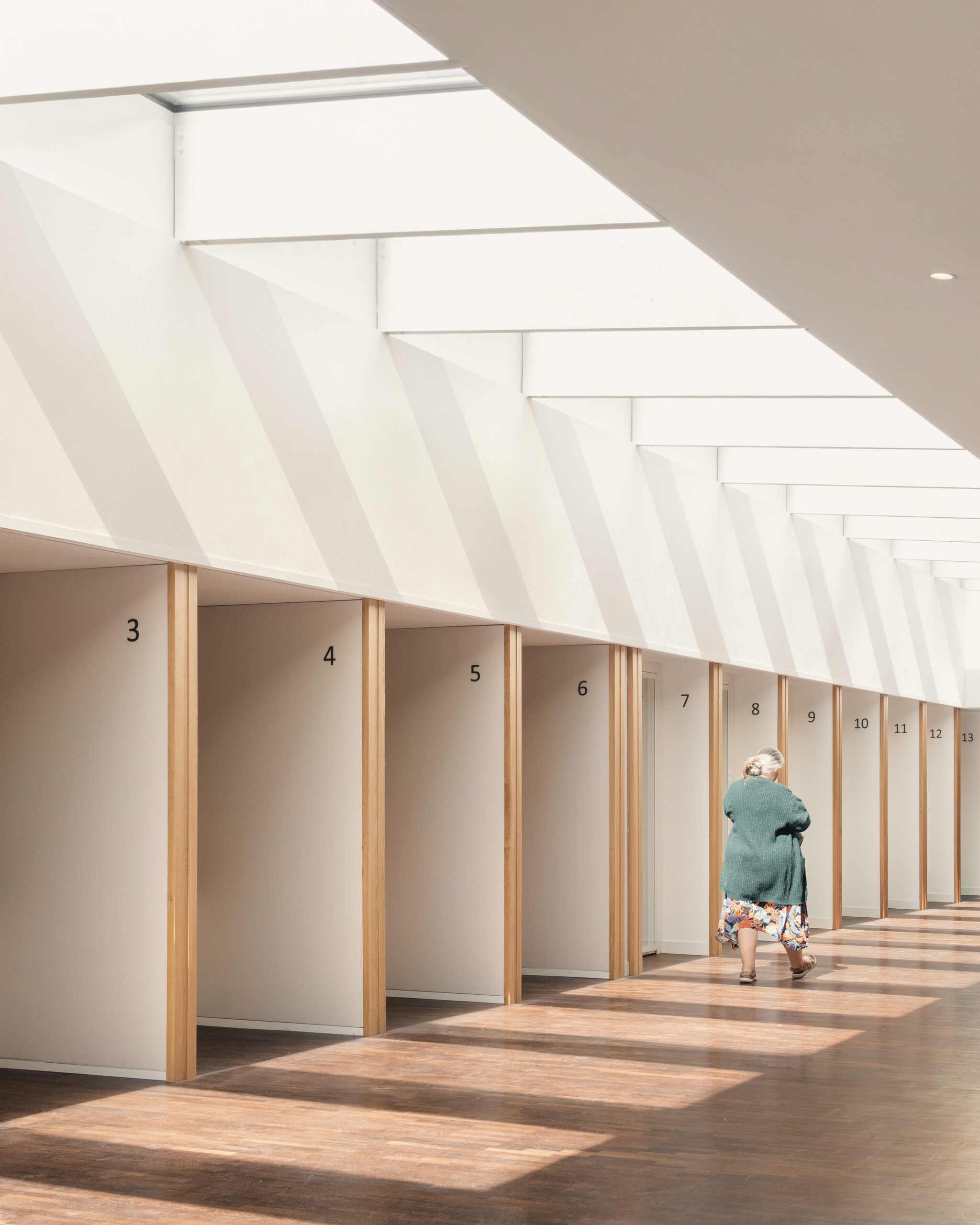
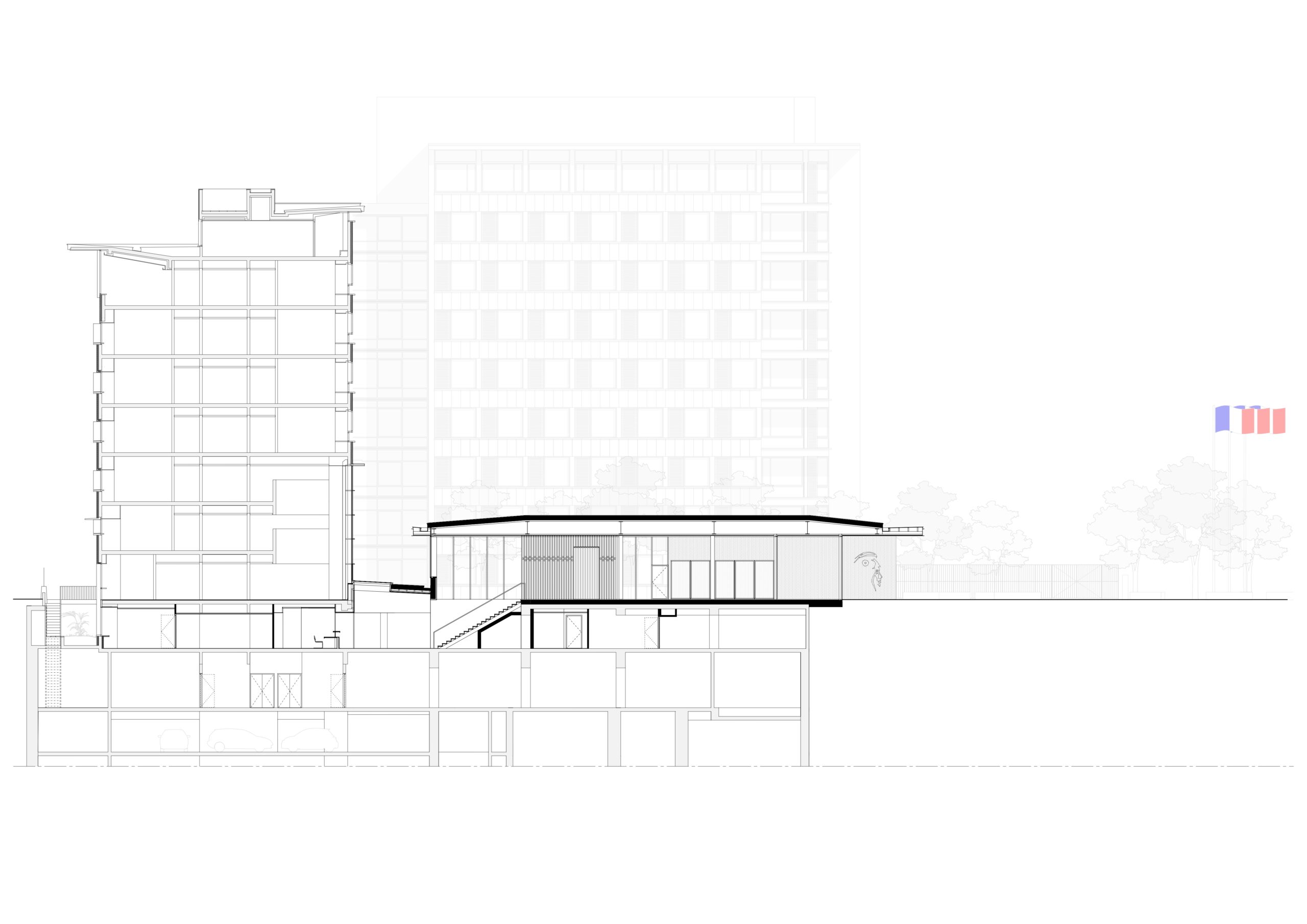
Le Nouveau Palais de Justice est situé en plein cœur du troisième arrondissement de Lyon. Le projet comprend à la fois la création d’un Service d’Accueil Unique du Justiciable et l’amélioration des conditions d’accès et d’accueil du public au Nouveau Palais de Justice.
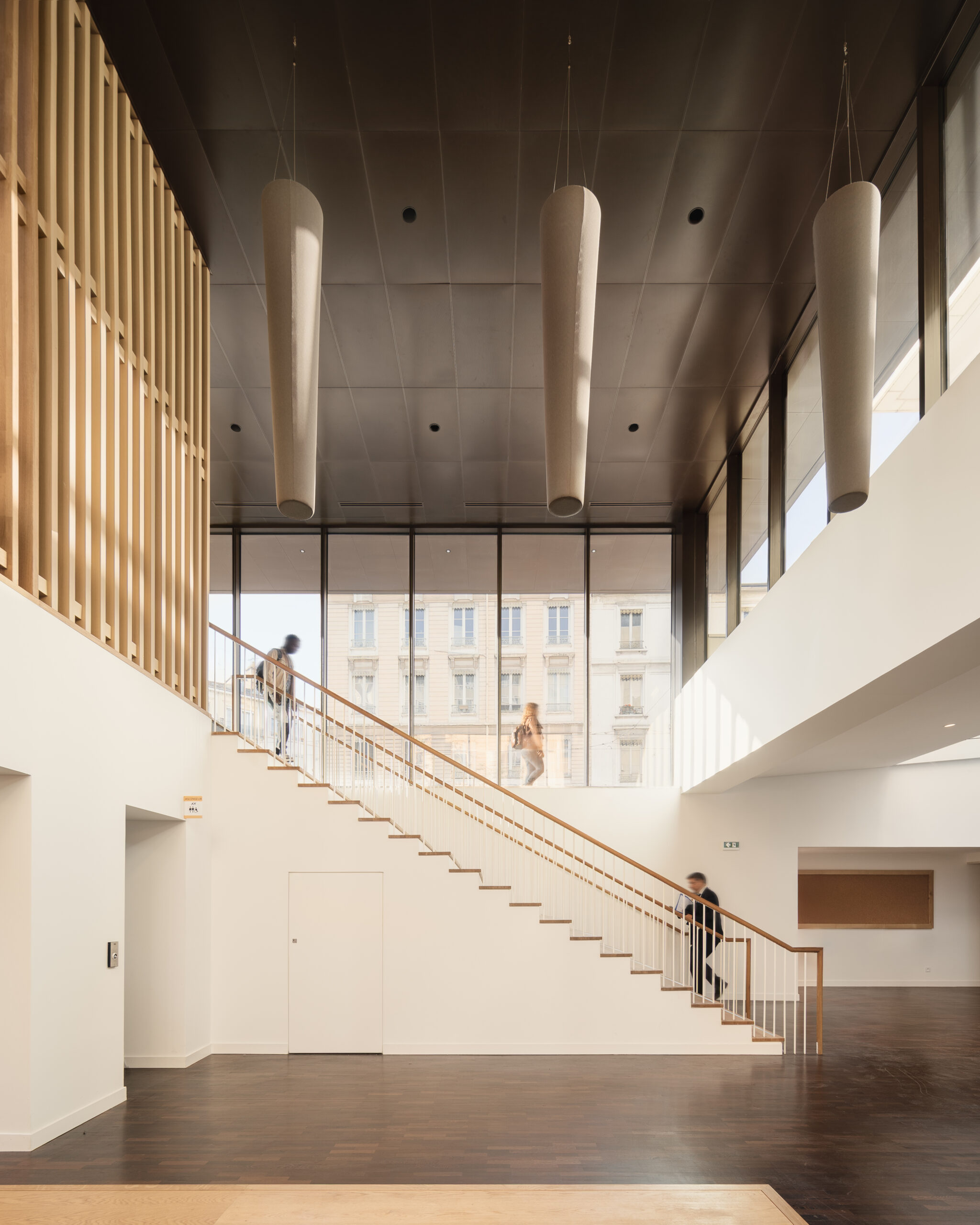
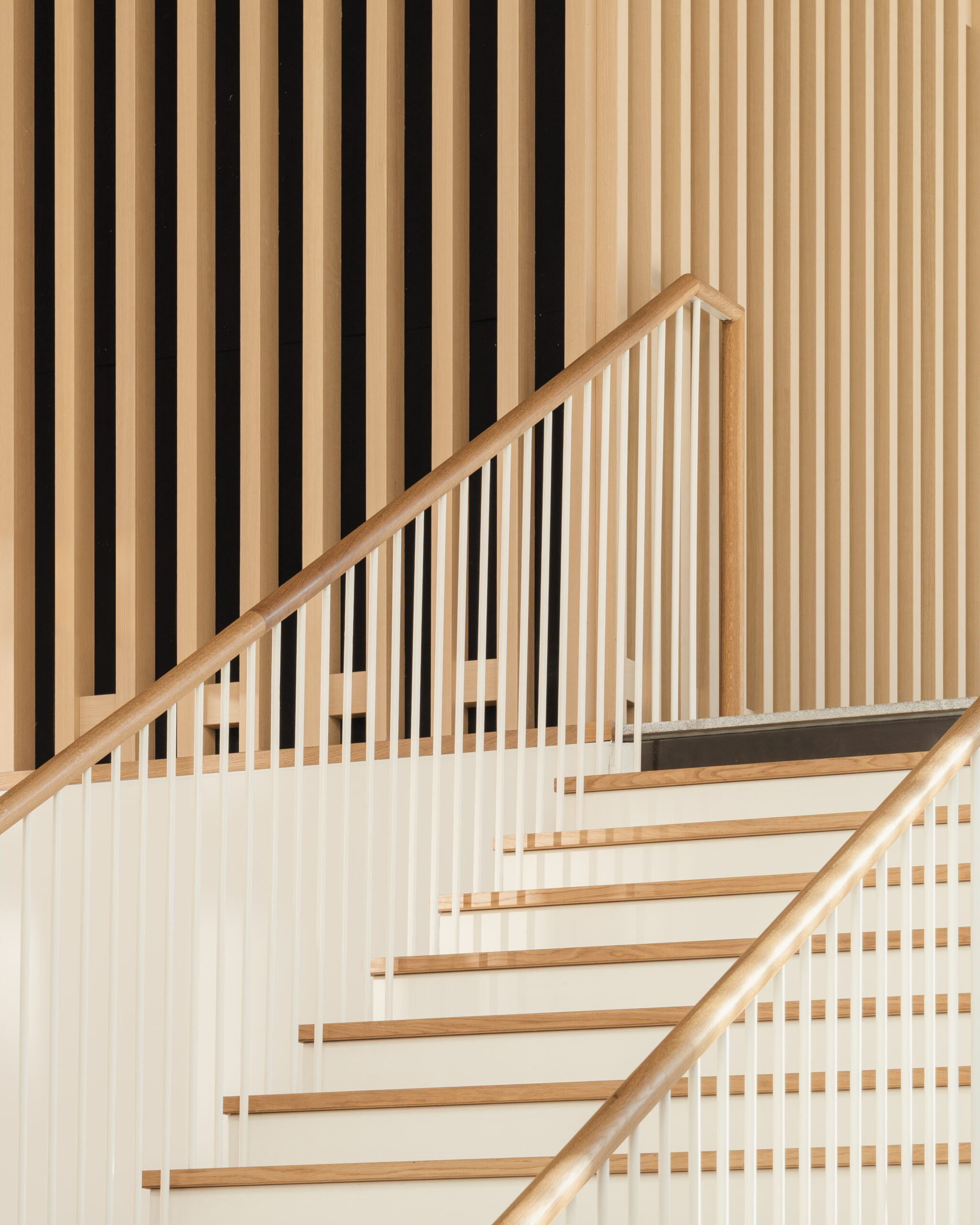
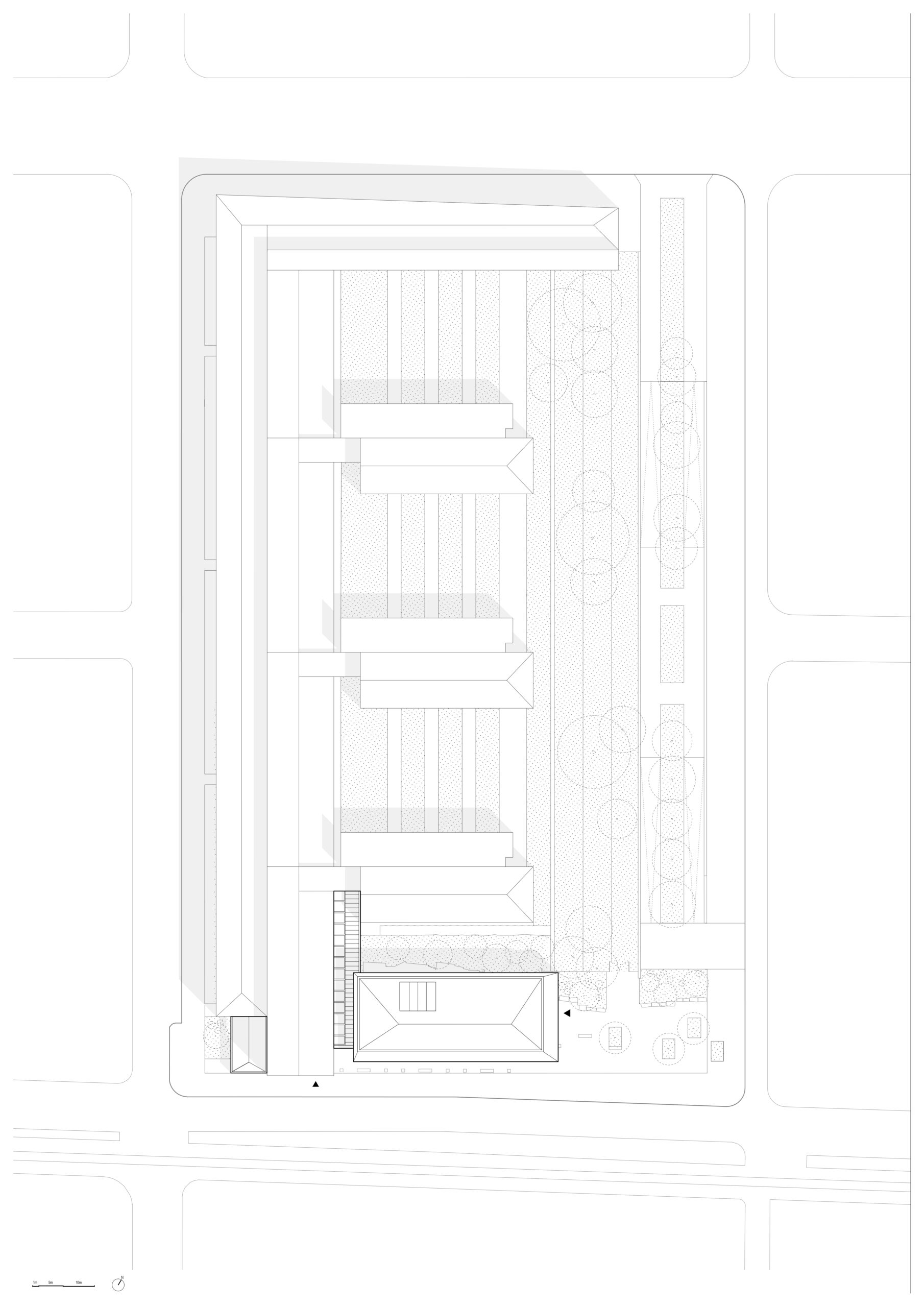
Dans le respect du bâtiment existant, notre projet se détache des constructions existantes tout en maintenant la lecture des articulations par failles et joints creux. Cette dissociation permet de développer une expression architecturale autonome, qui n’entre pas en concurrence avec l’existant tout en créant un signal fort malgré sa surface réduite. Plusieurs dispositifs sont mis en œuvre pour atteindre cet objectif : la dissociation du bâtiment par rapport aux existants, son implantation le long de la voie, l’échelle de ses éléments constitutifs comme les vitrages de grande hauteur, le porte-à-faux sur l’entrée principale. Le choix de l’horizontalité et de la transparence renforce la perception de légèreté et de fluidité. À l’intérieur, la grande lanterne en bois sur deux niveaux associée à l’escalier principal lie l’entrée à la salle des pas perdus du niveau inférieur.
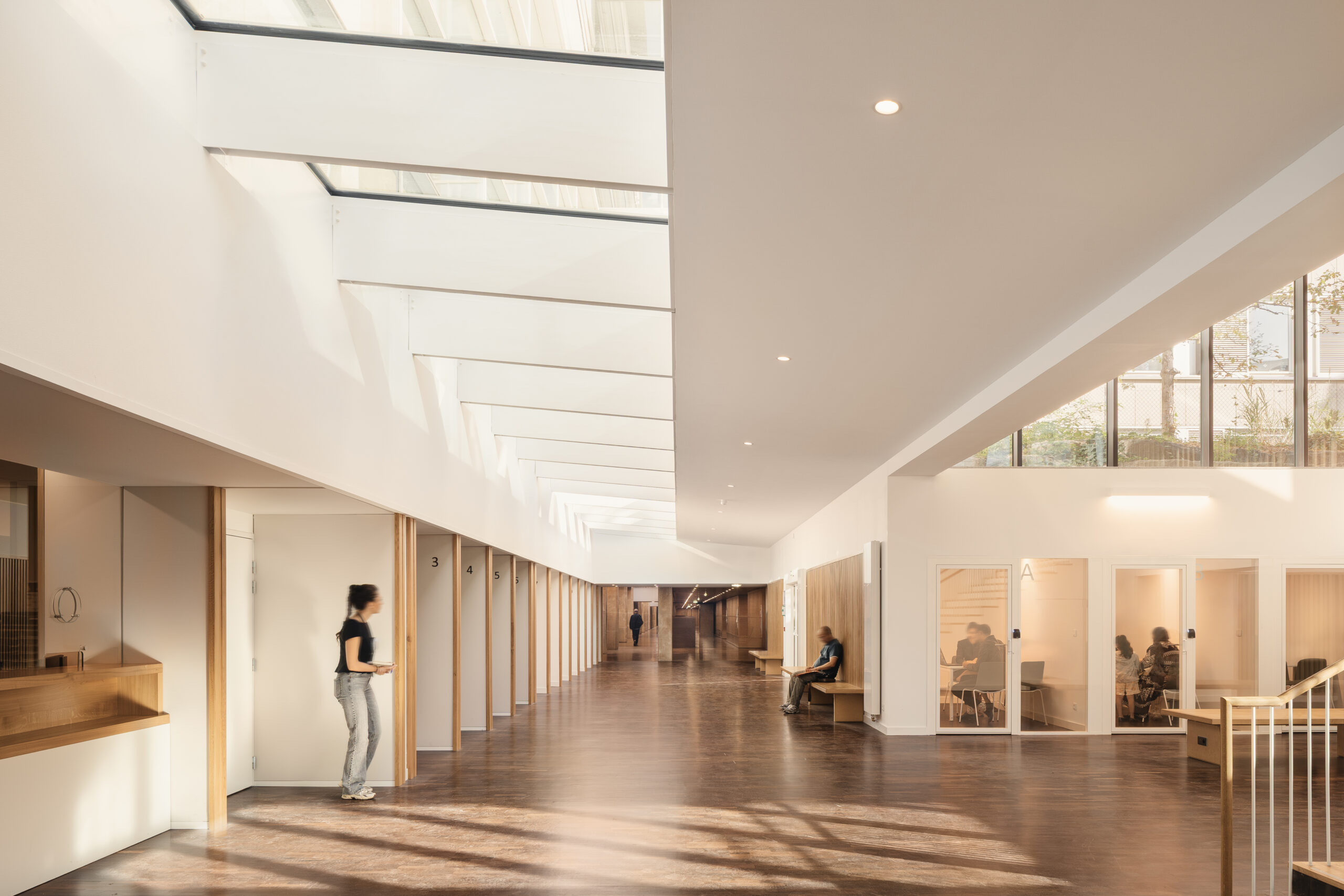
Le parti architectural, indissociable du parti fonctionnel, offre une organisation où les flux et les fonctions sont clairement identifiables. Les différentes séquences hiérarchisent le parcours depuis l’espace public jusqu’aux zones les plus confidentielles.
Crédit photo © Vladimir DE MOLLERAT DU JEU

The new courthouse is located in the heart of Lyon’s third arrondissement. The project includes both the creation of a Citizen Reception Center and the improvement of public access and reception conditions at the New Courthouse.
Respecting the existing building, our project distinguishes itself from the current structures while maintaining the reading of the articulations through gaps and recessed joints. This clear separation allows for an independent architectural expression that does not compete with the existing building, while still creating a strong visual impact despite its limited footprint. To meet this challenge, several design strategies are employed: separating the new building from the existing structures, positioning it along the street, the scale of its elements such as the tall glazing, and the cantilever over the main entrance. The emphasis on horizontality and transparency enhances the sense of lightness and fluidity. Inside, the large two-story wooden lantern, combined with the main staircase, connects the entrance to the main hall on the lower level.
The architectural concept, inseparable from the functional approach, provides an organization in which circulation and functions are clearly identifiable. The different sequences establish a hierarchy along the journey from public spaces to the most confidential areas.