
GROUPE SCOLAIRE ÉLISABETH & ROBERT BADINTER | BRON (69)
School group
CLIENT : Mairie de Bron | Bron City Council
CONSULTANTS : DEMAIN (paysagiste); C+POS (BET HQE); CET (BET TCE)
SURFACE : 2 650 m²
PHASE : Competition 2022 – Completion 2025
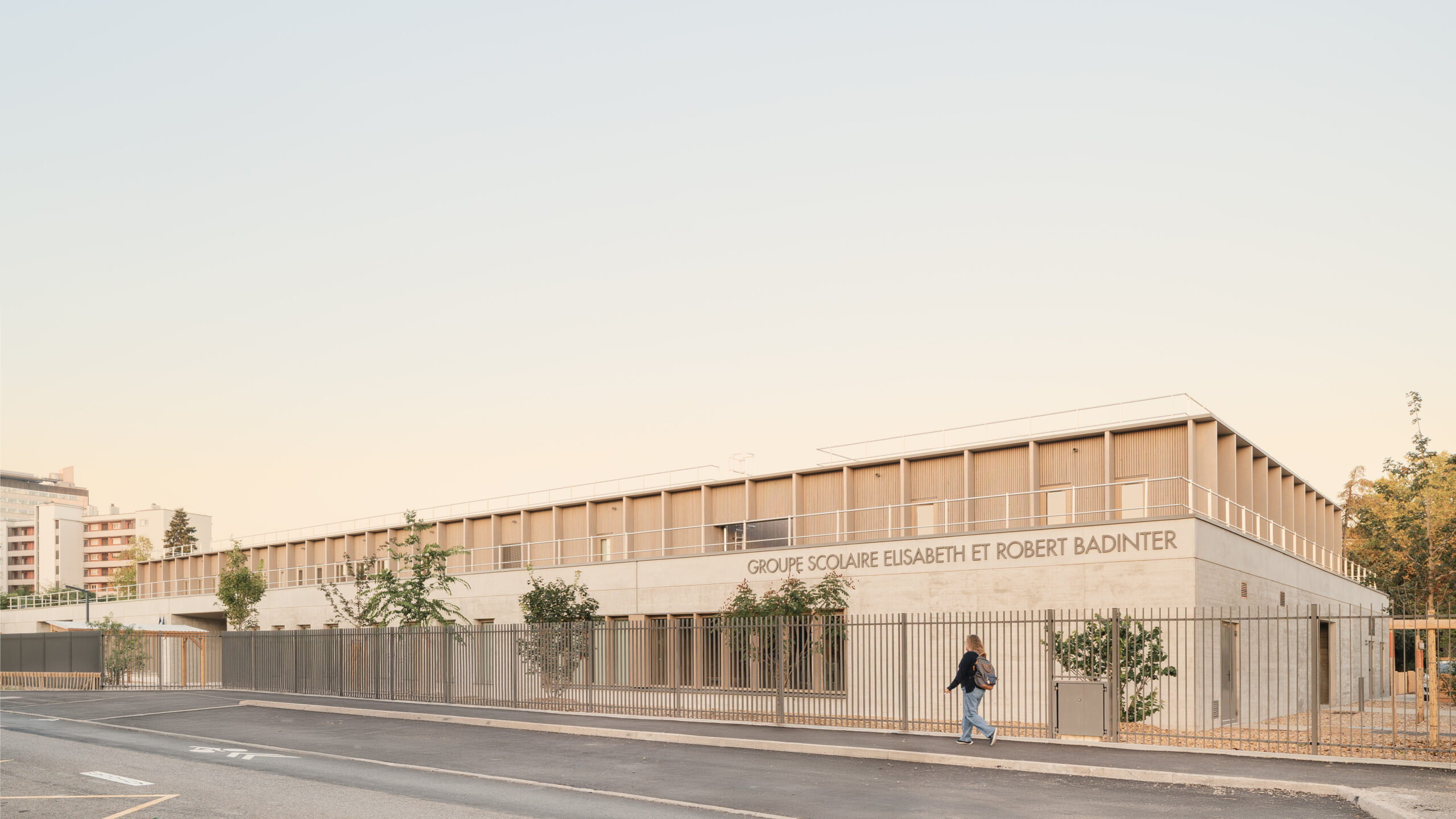
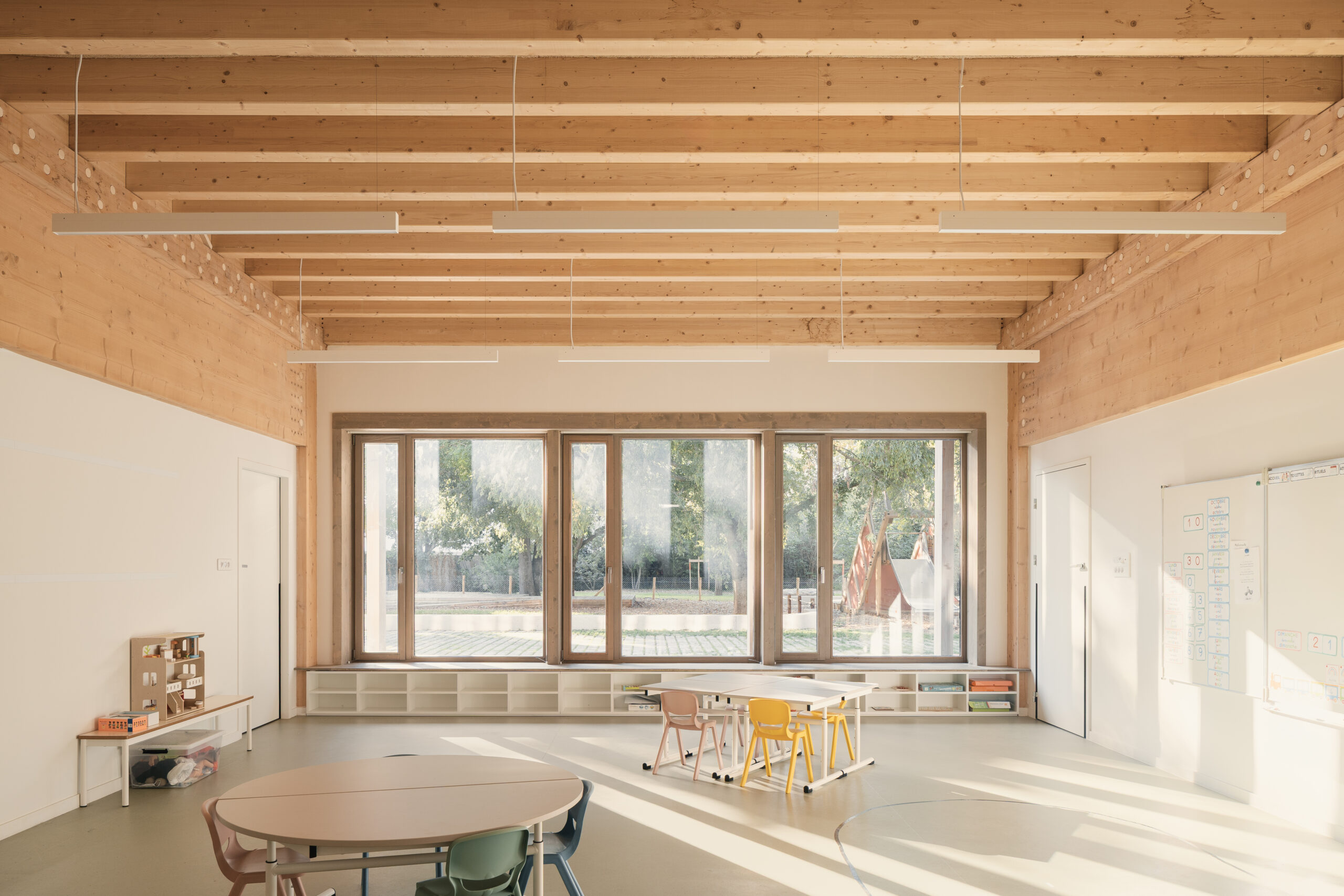
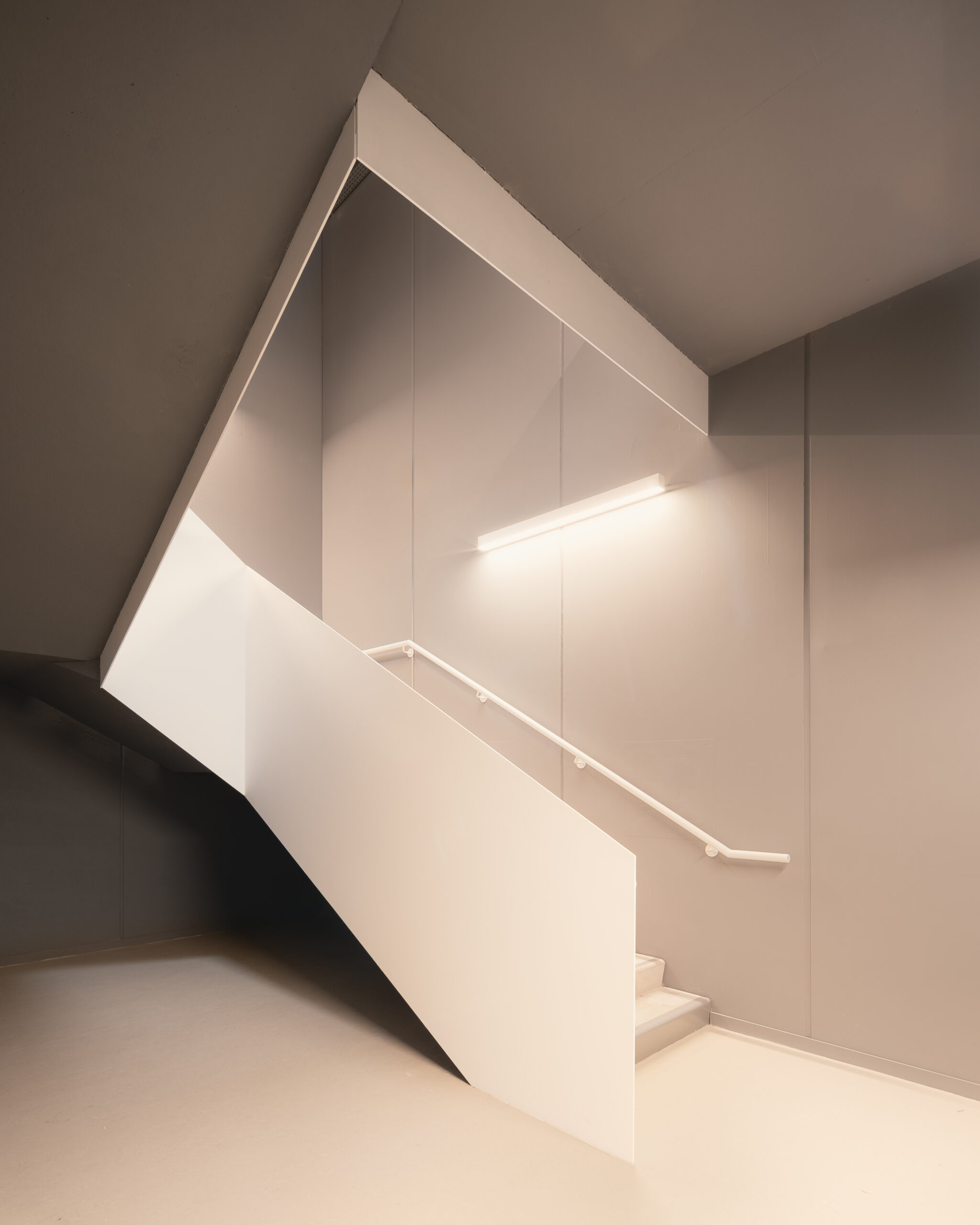
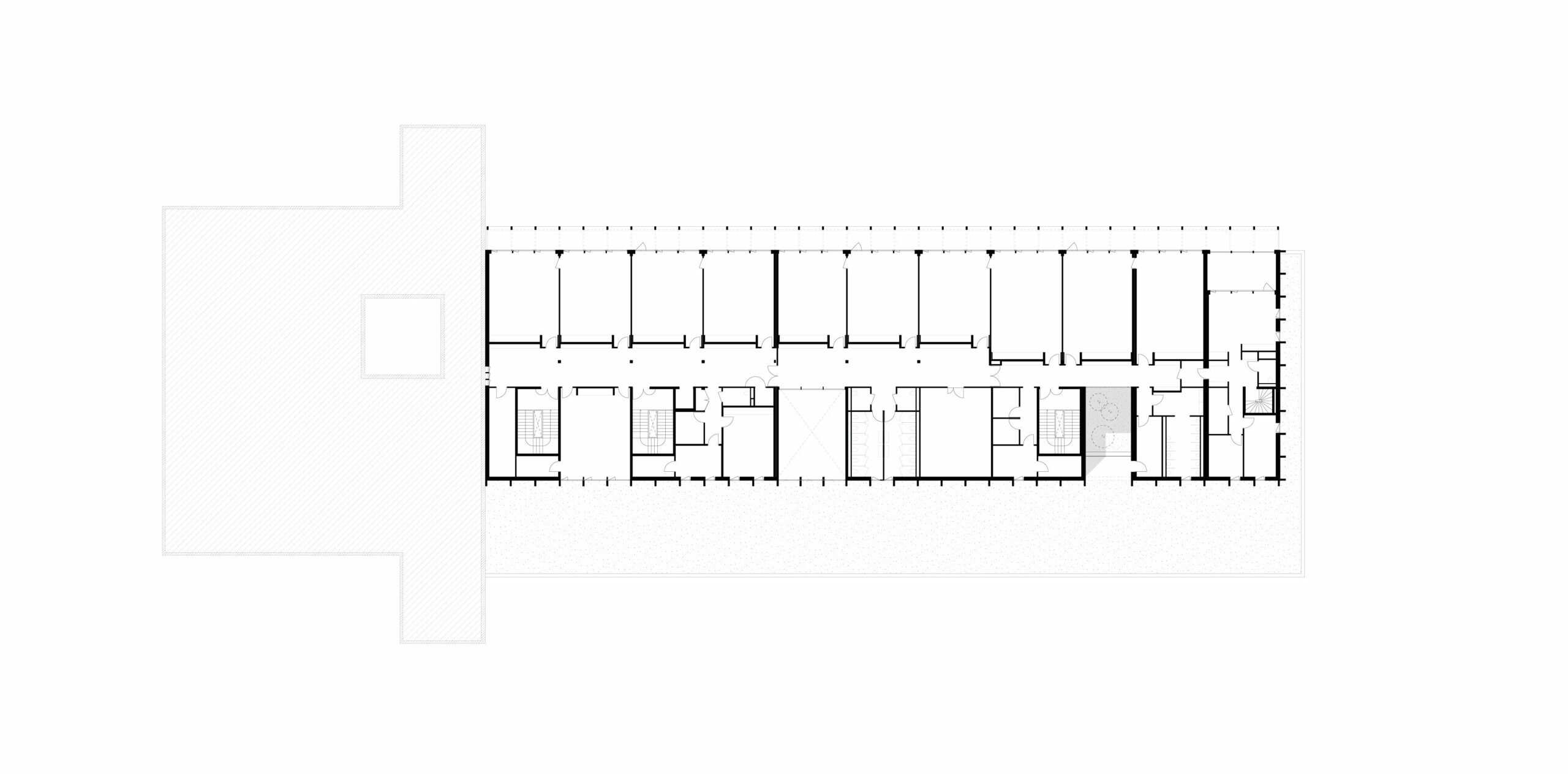
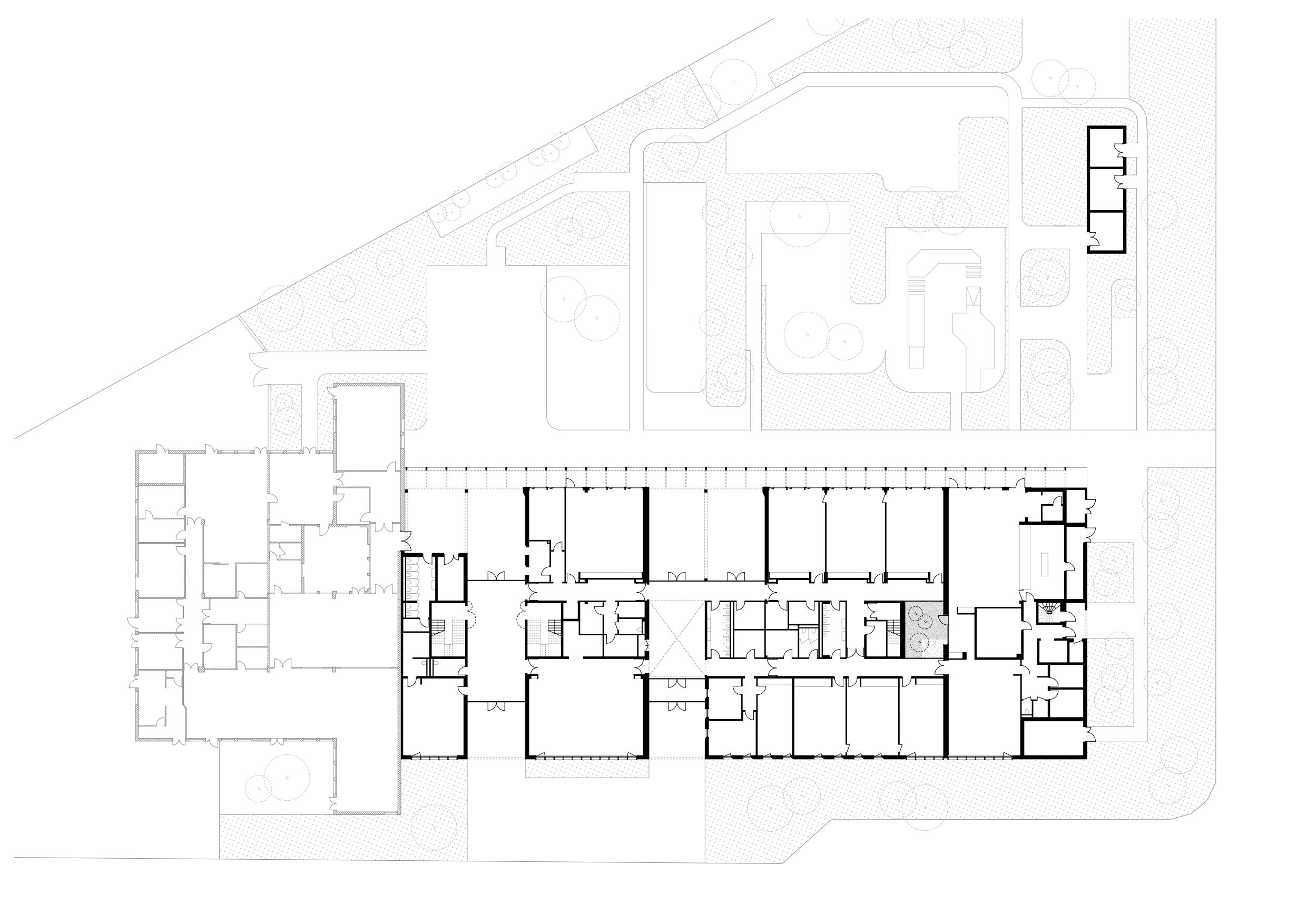
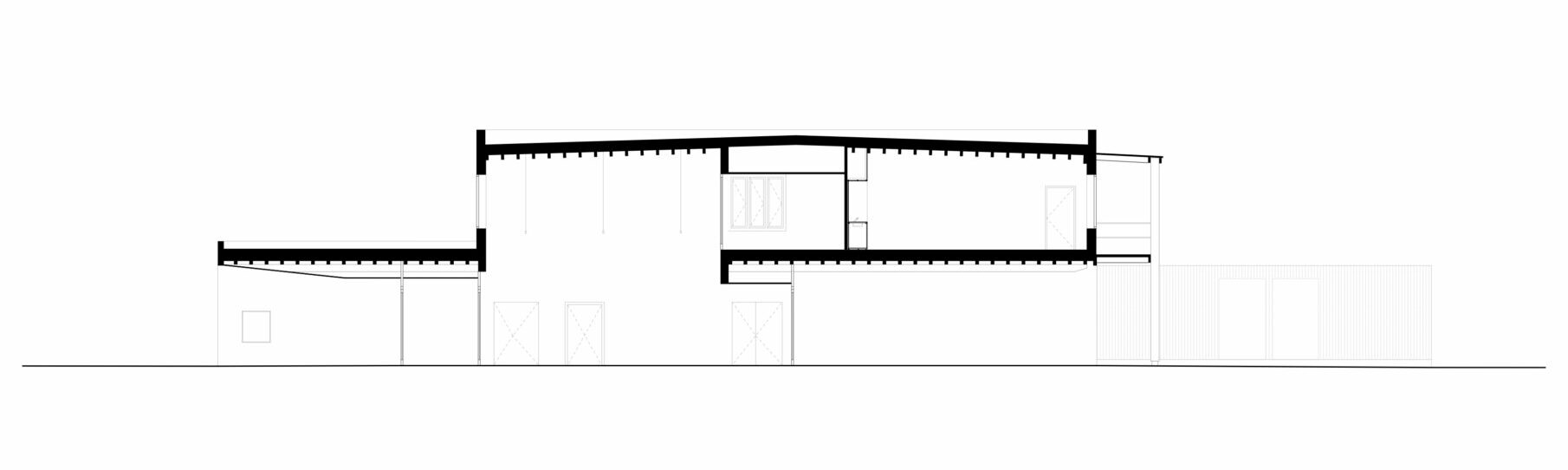
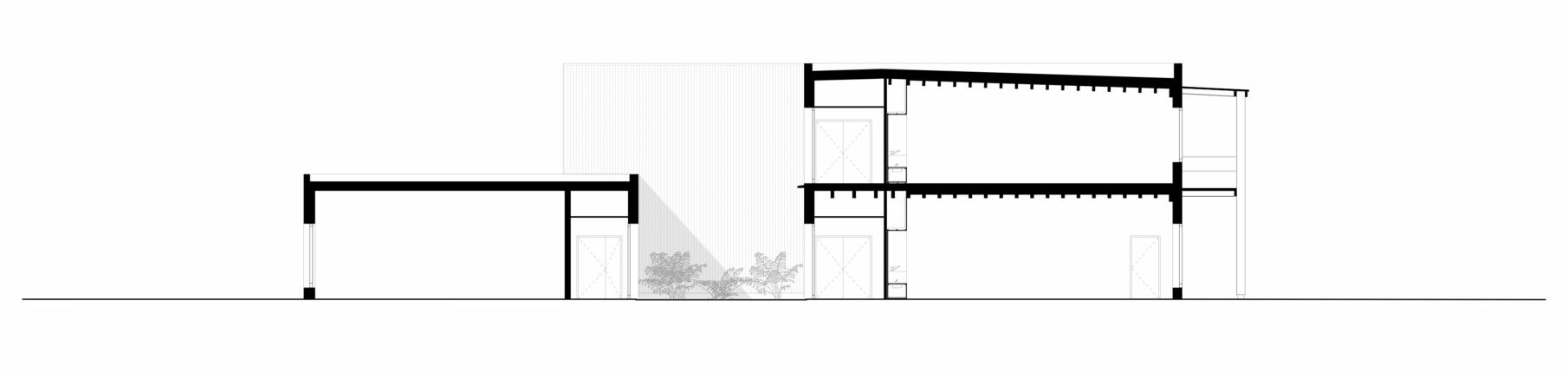
La construction est située à Bron, dans une zone mixte à densité moyenne. Le projet comprend une école maternelle, une école élémentaire et un accueil périscolaire, pour un total de 14 salles de classe. Le développement d’un modèle d’école inclusive, dans le cadre du projet «Tous à l’école», permet notamment l’accueil d’enfants polyhandicapés afin de favoriser leur scolarisation en milieu ordinaire avec les autres élèves, tout en respectant leurs besoins spécifiques.
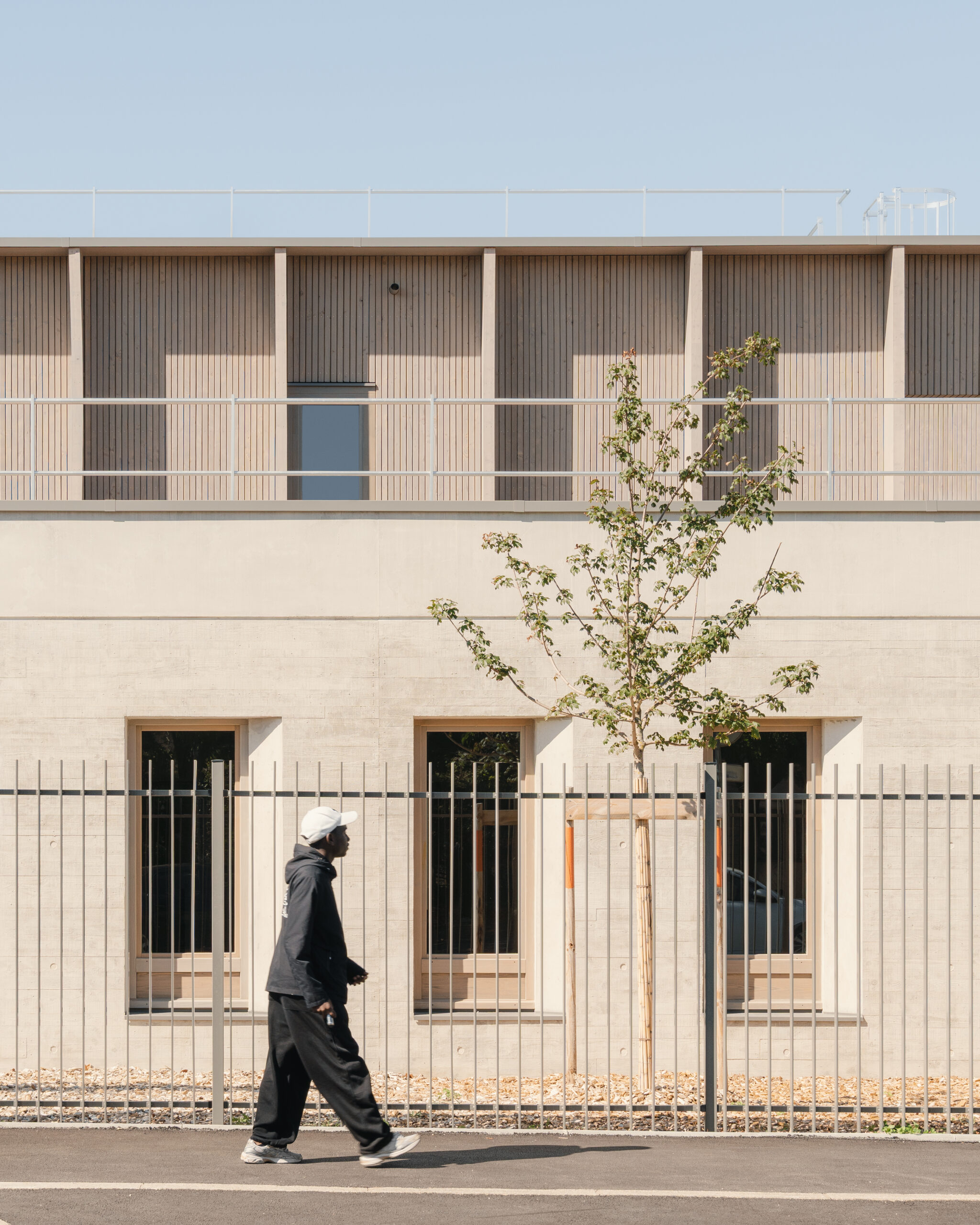
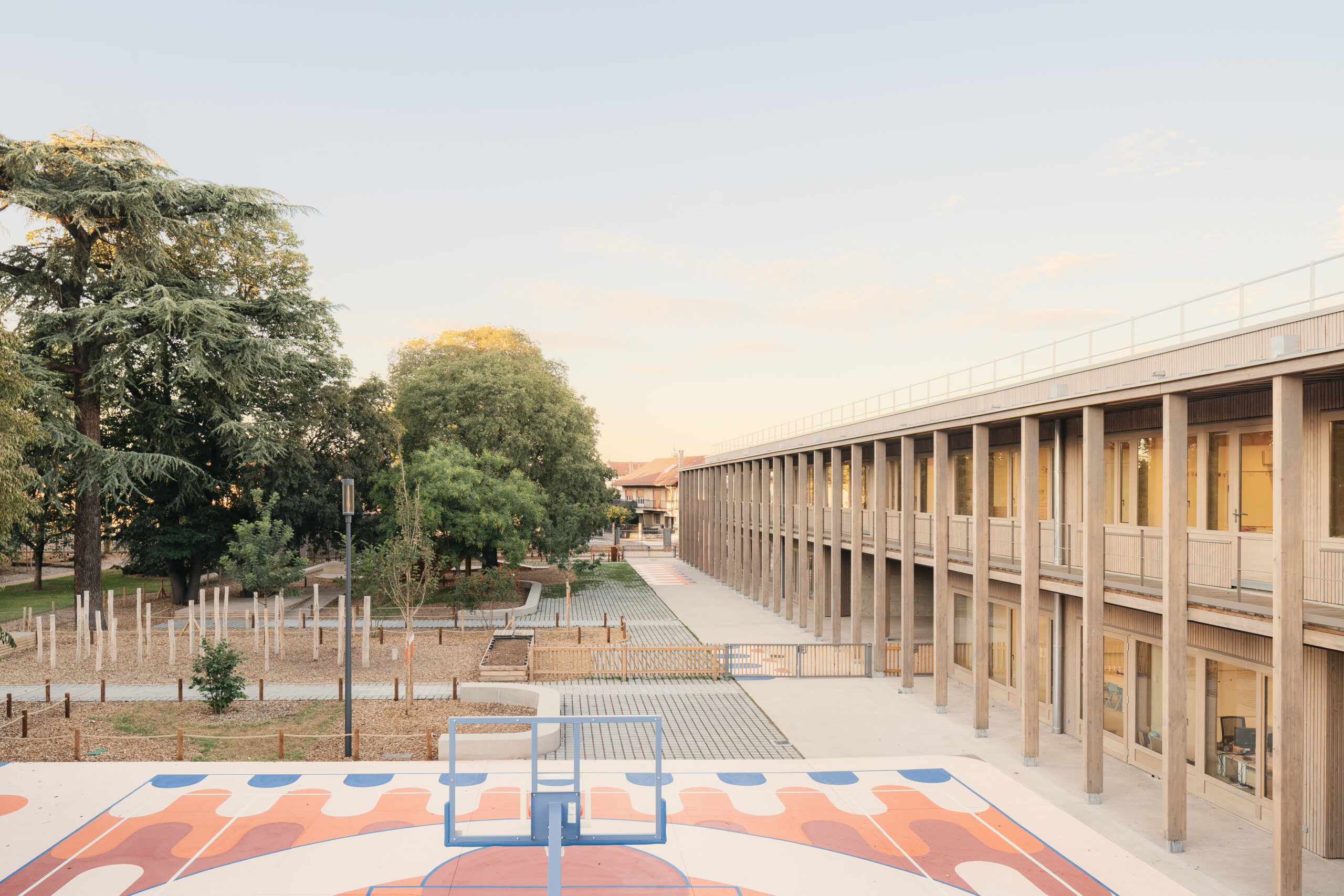
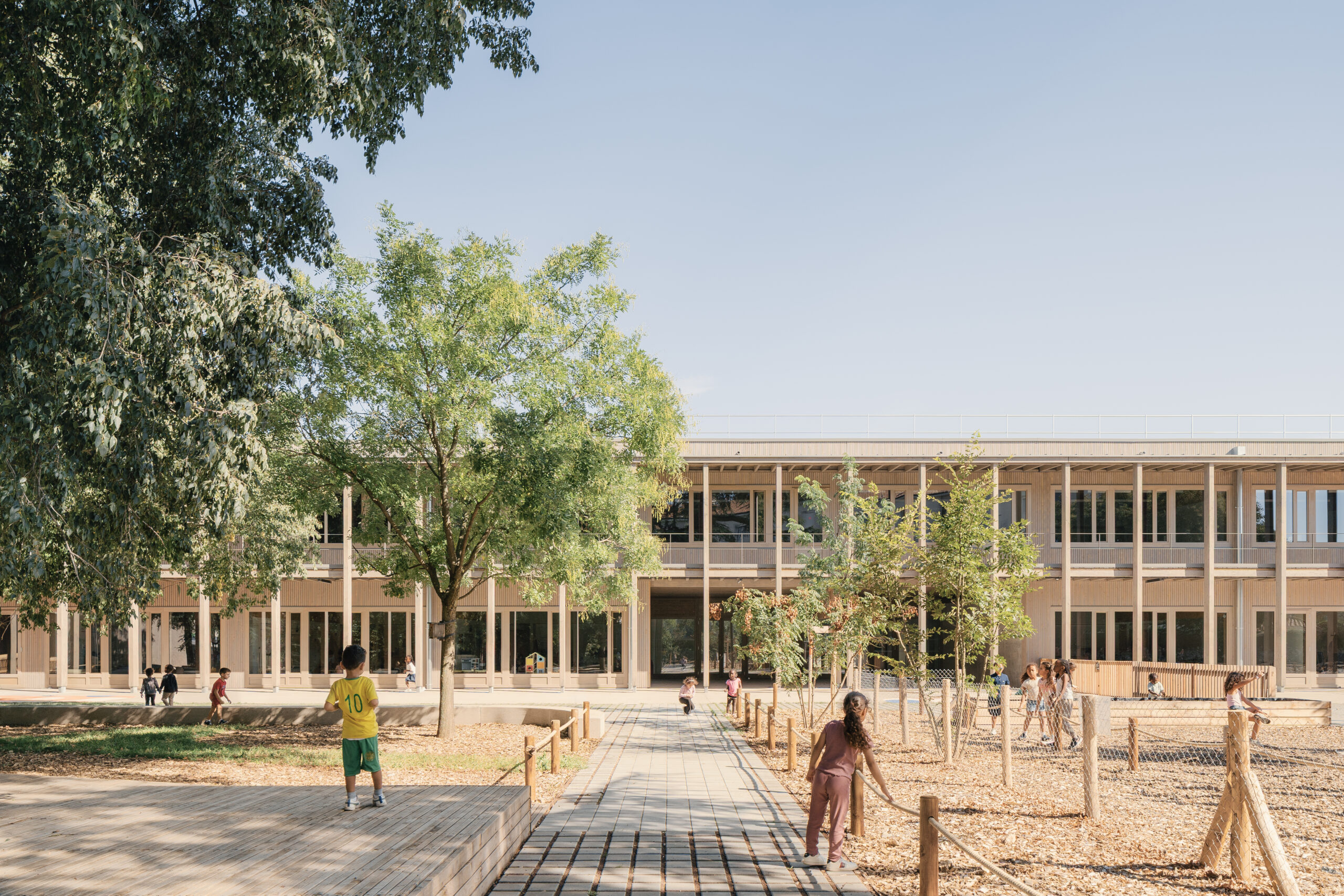
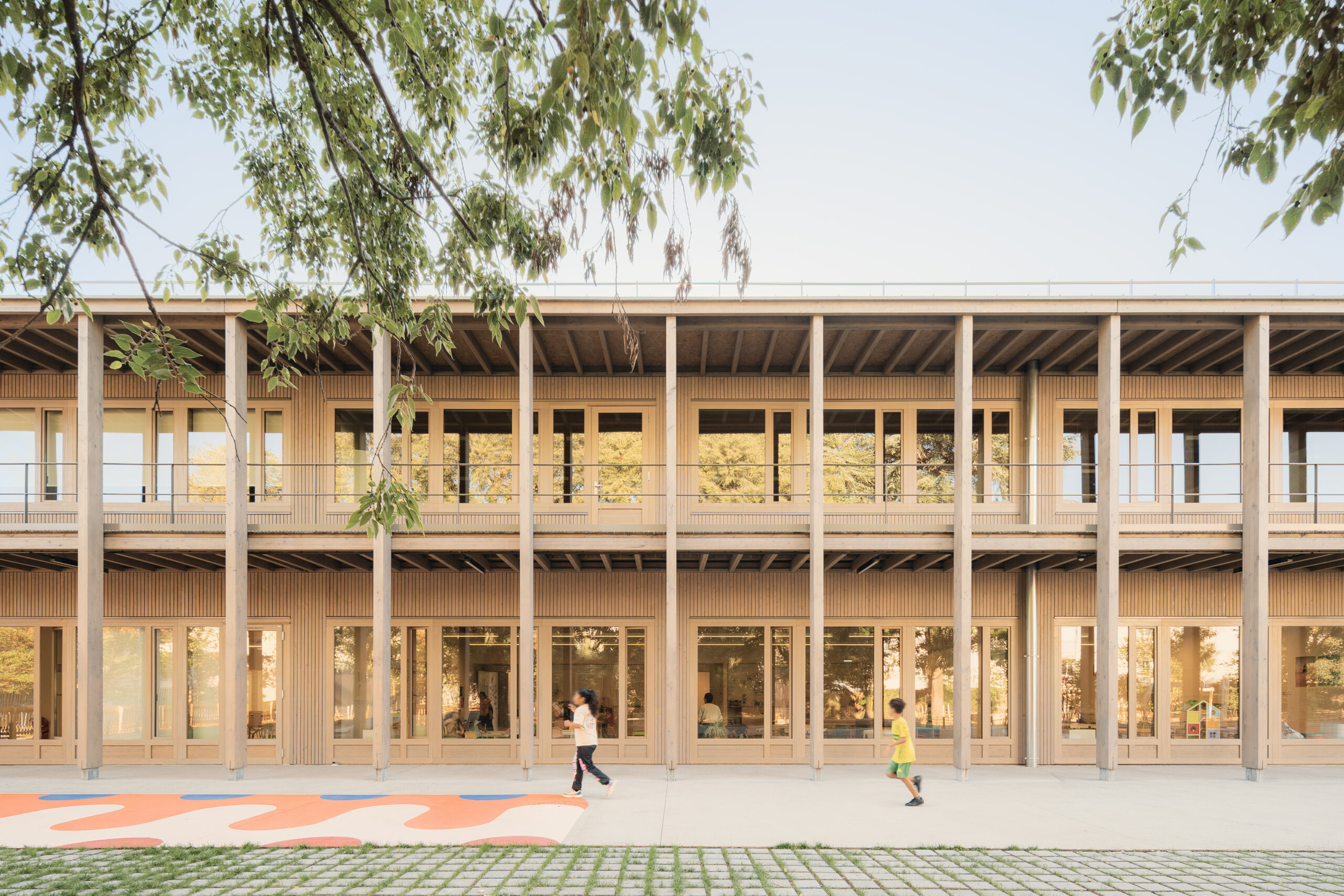
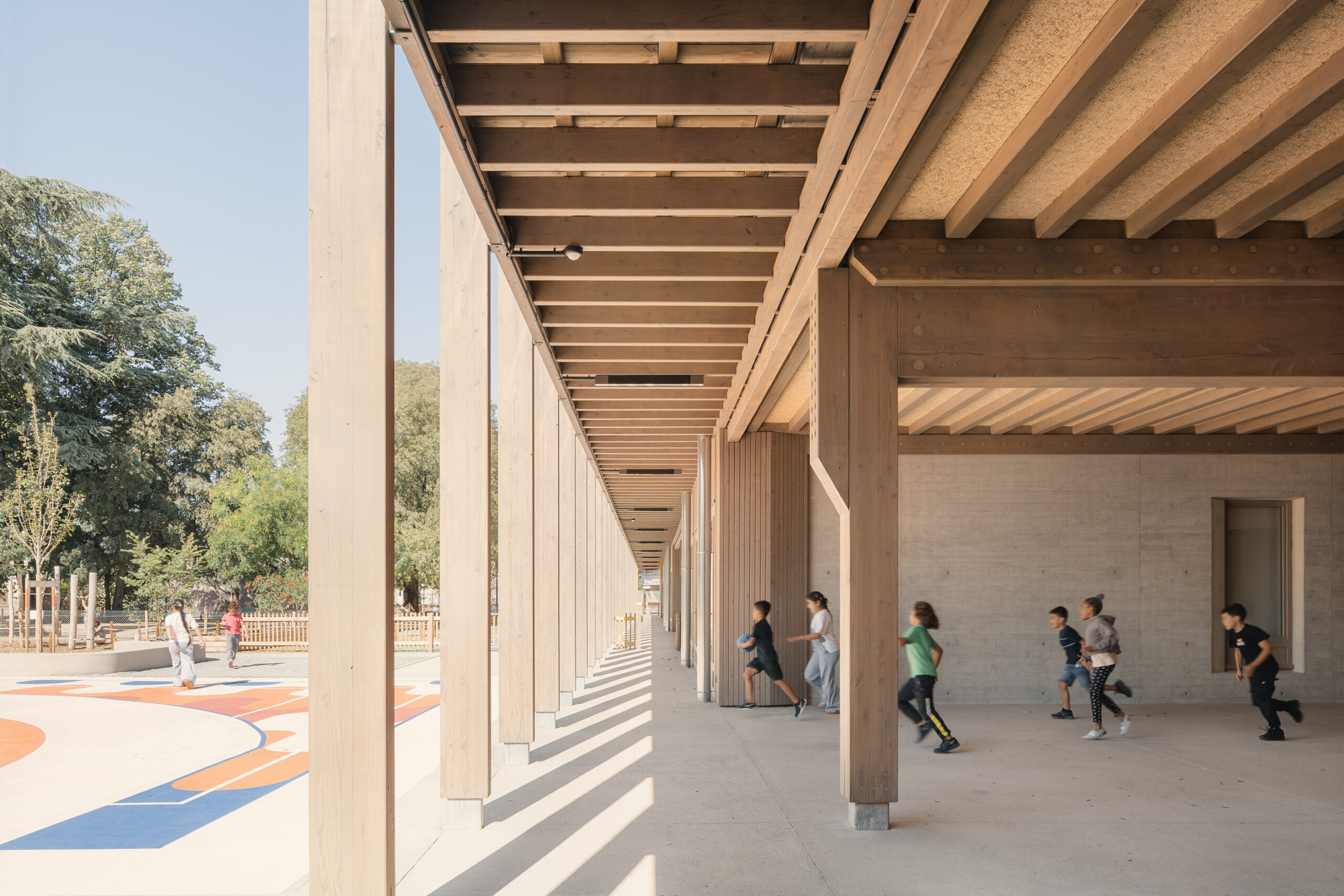
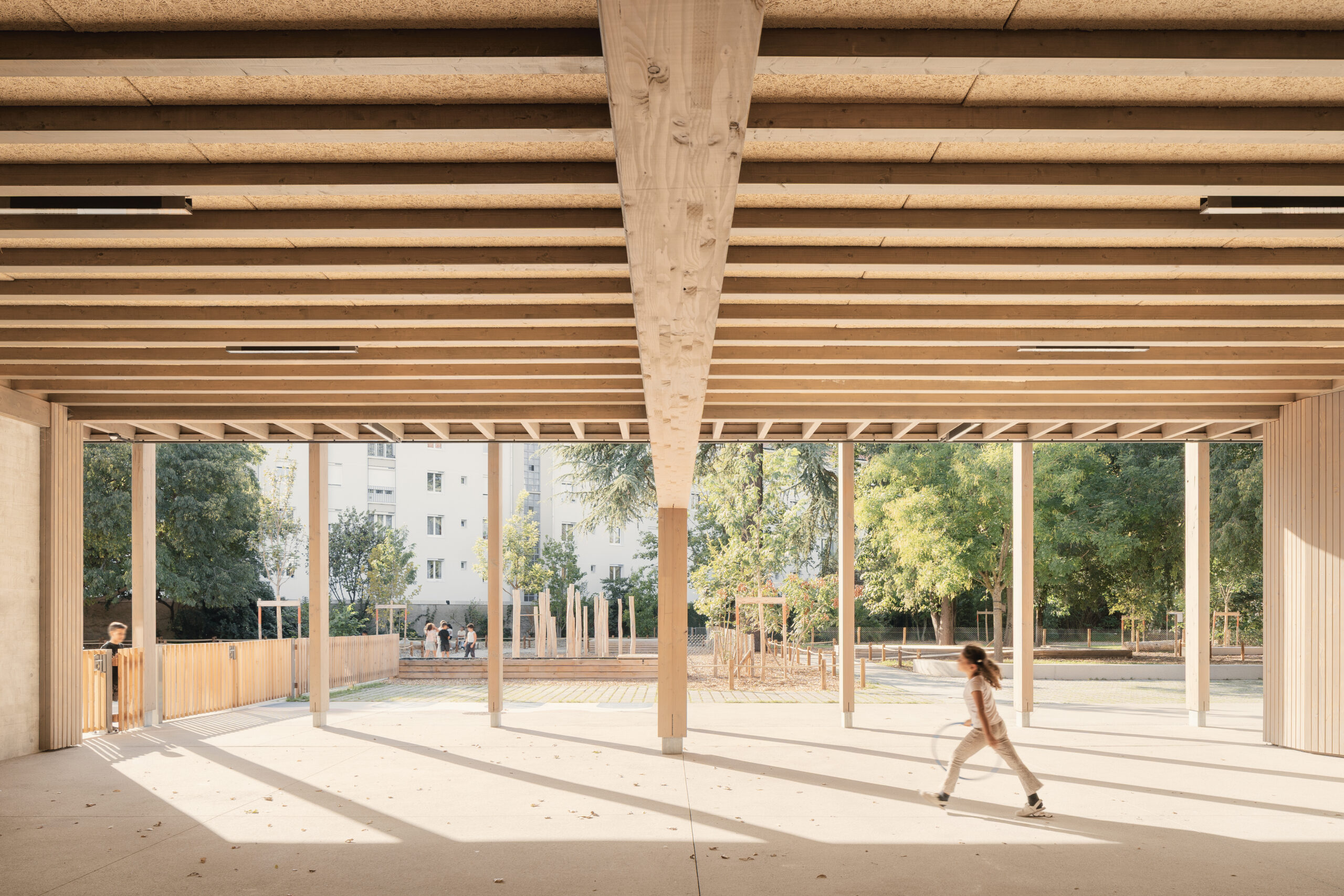
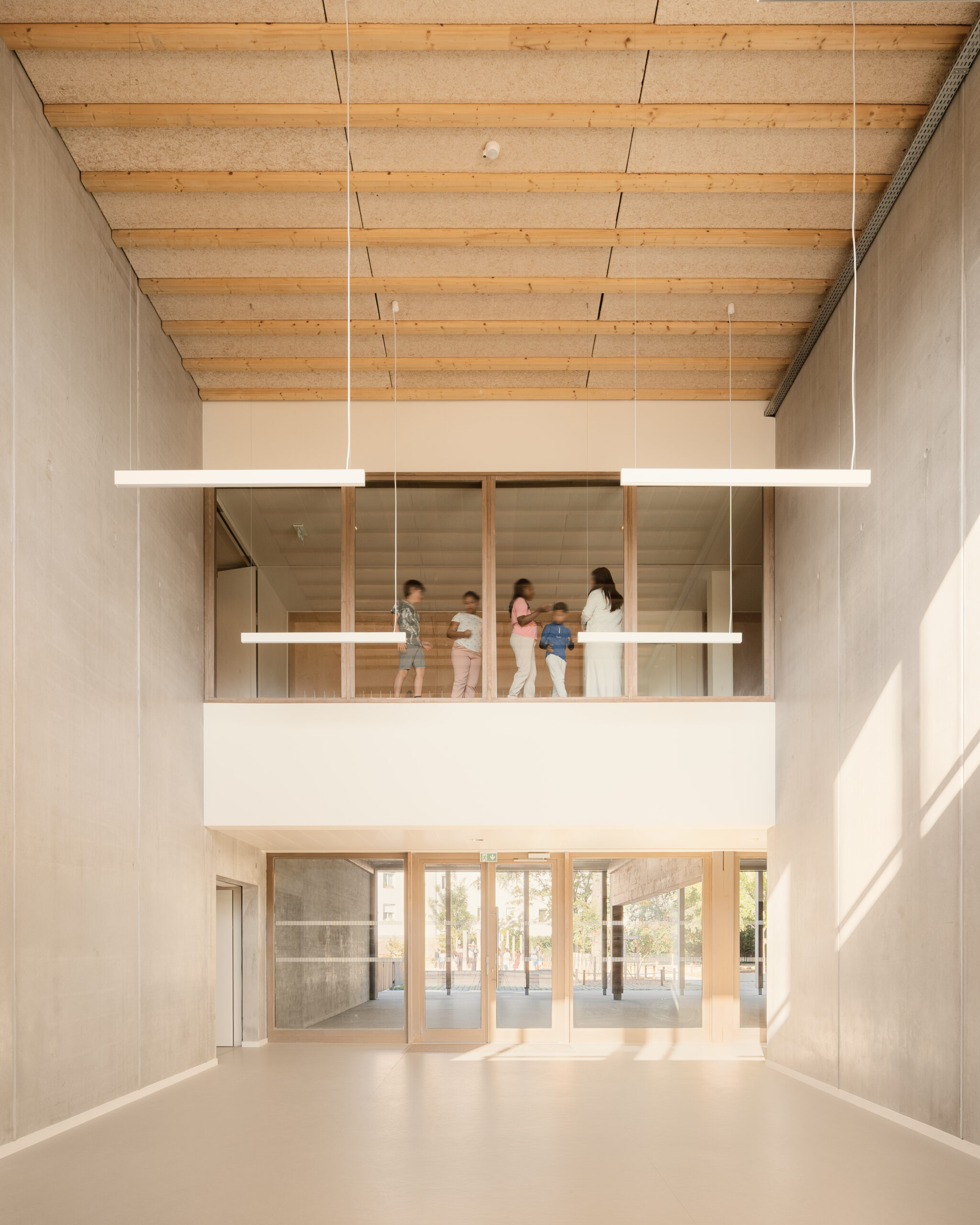
Le bâtiment offre deux façades très différentes selon leur orientation. Côté rue, un socle minéral assoit le bâtiment avec prestance et solidité. Côté parc, tourné vers la végétation et les cours de récréation, un volume entièrement en bois se fond dans le contexte arboré. Le socle minéral joue ainsi un rôle protecteur pour cet écrin de bois et de verdure, le préservant des nuisances de la rue. Un jeu d’emboîtement entre le volume en bois et celui en béton permet de composer une architecture harmonieuse où minéral et végétal dialoguent naturellement. Au cœur de la parcelle, le socle minéral s’efface au profit du rythme rigoureux et élancé des éléments verticaux de la façade bois.
L’implantation paysagère repose sur une logique de «finger landscape», où les «doigts» végétaux forment des percées verdoyantes, tandis que les vides créent des lieux de vie adaptés aux écoliers : aires de jeux, mobiliers sur mesure, jardins et espaces pédagogiques dédiés à la sensibilisation écologique. La palette végétale a été pensée pour favoriser l’éveil aux saisons et introduire une diversité de milieux, en contraste avec le contexte urbain uniforme et pauvre en variété végétale.
Crédit photo © Vladimir DE MOLLERAT DU JEU

The building is located in Bron, within a mixed-use, medium-density area. The project includes a preschool, a primary school, and an after-school facility, for a total of 14 classrooms. The development of an inclusive school model, as part of the “Tous à l’école” (School for All) initiative, allows for the inclusion of children with multiple disabilities, promoting their education in a mainstream environment alongside other pupils while meeting their specific needs.
The building offers two very different façades depending on its orientation. On the street side, a mineral base anchors the building with presence and solidity. On the park side, facing the vegetation and playgrounds, a fully wooden volume blends naturally into the tree-filled setting. The mineral base therefore acts as a protective layer for this wooden and green envelope, shielding it from street-related disturbances. The interlocking between the wooden volume and the concrete one creates a harmonious architecture in which mineral and natural elements interact smoothly. At the heart of the site, the mineral base gives way to the rigorous and slender rhythm of the vertical elements of the timber façade.
The landscape design is based on a “finger landscape” concept, where the vegetated “fingers” create green openings, while the spaces in between form living areas tailored to schoolchildren: play zones, custom-built furniture, gardens, and educational spaces dedicated to environmental awareness. The planting palette was designed to heighten awareness of seasonal changes and to introduce a diversity of habitats, contrasting with the uniform urban environment that lacks plant variety.